Let’s turn to the story of Mary in the Gospel of Luke — a story that begins with an extraordinary event that changed her life forever. When the angel appeared to Mary, it was both terrifying and awe-inspiring. The angel told her, “God has found favor with you,” a message that must have filled her with both immense joy and overwhelming responsibility. Mary knew her life was about to change in ways she could not fully comprehend, and the road ahead would be far from easy.
At this moment, Mary understood one thing clearly: she would become pregnant before she was married. In today’s world, this might not carry the same weight in many cultures, but in first-century Judaism, this was a grave matter. In fact, it was considered a capital offense. For Mary, a young teenager, this situation was unimaginably difficult. Her future seemed uncertain, her dreams of a traditional marriage to Joseph at risk of being destroyed.
The Cultural Context of Mary and Joseph’s Betrothal
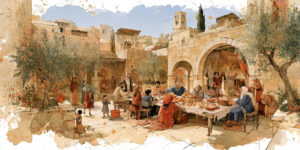
Mary and Joseph were betrothed — a legally binding agreement akin to marriage, though they were not yet living together. In those times, families often arranged marriages long before the couple came of age. These arrangements were not based on romantic feelings but on practical considerations and family alliances. While this may seem foreign to modern cultures, it was the norm for much of human history, including in first-century Israel.
Betrothal carried significant weight. If Mary or Joseph had died during this period, the surviving partner would have been considered a widow or widower. Thus, Joseph’s discovery of Mary’s pregnancy was a serious matter. Initially, Joseph planned to quietly divorce her, in accordance with Jewish law, to avoid public disgrace or even her execution. However, God intervened through an angel, who assured Joseph that the child was conceived by the Holy Spirit. Joseph, a man of great character, obeyed God’s command and took Mary as his wife, protecting her and the child she carried.
The Misconceptions Surrounding Mary
Mary’s role in God’s plan has often been misunderstood, leading to traditions and doctrines that elevate her beyond the Biblical account. For example, the doctrine of the Immaculate Conception, which claims Mary was born without sin, was introduced to address theological questions about Jesus’ sinlessness. However, this teaching is not rooted in Scripture.
While Mary was an extraordinary individual, chosen by God for a pivotal role in salvation history, she was still human. Like all of us, she needed the saving grace of Jesus Christ. The Bible emphasizes that there is salvation in no one else but Jesus. Mary herself recognized her need for a Savior, as expressed in her song of praise (Luke 1:46-47).
Unfortunately, attempts to elevate Mary have sometimes led to practices that distract from the centrality of Jesus. The veneration of Mary, including the belief in her assumption into heaven and her role as a mediator, lacks biblical foundation. While honoring Mary as a role model of faith is appropriate, worship belongs to God alone.
The Danger of Detours in Faith
Human nature often seeks to simplify or explain the mysteries of God by creating traditions or assigning divine roles to people or objects. From the veneration of Mary to the adoration of objects bearing her likeness, these practices can lead believers away from the core message of the Gospel. Such detours are dangerous because they shift focus from Jesus, the true source of salvation.
As believers, we are called to approach God directly through Jesus. He is the one who invites us into a personal relationship with Him, offering forgiveness, grace, and eternal life. Mary, though an exceptional example of faith and obedience, cannot fulfill the role of a deity or mediator.
Conclusion: Trust in the Power of God
Mary’s story is a testament to the power of faith and trust in God’s plan, even in the face of fear and uncertainty. She exemplifies courage, humility, and unwavering devotion. However, it’s vital to remember that she points us to Jesus, not away from Him. Her life reminds us to trust in God’s promises, even when we don’t fully understand them.
As we reflect on Mary’s story, let us honor her as an example of faith while keeping our worship centered on Jesus, the King of the Universe. In Him alone, we find salvation, hope, and the abundant life that God promises.
8.12.2024