Yom Kippur
God does not bring our sin to light simply to leave us feeling guilty. He wants to free us from what destroys us, restore our relationship with Him, and give
“On the fifteenth day of the seventh month, when you have gathered in the produce of the land, you shall celebrate the feast of the Lord seven days. On the first day shall be a solemn rest, and on the eighth day shall be a solemn rest. And you shall take on the first day the fruit of splendid trees, branches of palm trees and boughs of leafy trees and willows of the brook, and you shall rejoice before the Lord your God seven days. You shall celebrate it as a feast to the Lord for seven days in the year. It is a statute forever throughout your generations; you shall celebrate it in the seventh month. You shall dwell in booths for seven days. All native Israelites shall dwell in booths, that your generations may know that I made the people of Israel dwell in booths when I brought them out of the land of Egypt: I am the Lord your God.”
Thus Moses declared to the people of Israel the appointed feasts of the Lord.Leviticus 23:39-44
Every year the nation of Israel closed its sacred calendar with a line of autumn festivals. These were not optional extras for the especially devout. They were the rhythm of a people who wanted to stay in relationship with God. Jesus Himself would have kept them, year after year, as long as He walked the earth.
Taken together, those days tell a story we still need: God gets our attention. He asks us to look honestly at our sin. He covers it. And then — this is the part we often miss — He tells us to throw a party.
A man was walking toward an elevator behind a young woman who was tossing her keys from hand to hand. On the last toss she missed. The keys slid across the floor and disappeared down the shaft.
His first thought was pity. She would have to go downstairs, find someone with authority, wait while they made sure the elevator would not come down, and then pick through the dark at the bottom of the building. His heart broke for her.
Then she said, “Oh no. Not again.”
We all make mistakes. We all, at times, decide we have a better idea than God. We pick up a thought, try something, and then discover that the thing we hoped would happen is not what happened at all. The point is not to pretend we never drop the keys. The point is to learn.
God wanted Israel to learn from its mistakes — not once a decade, but every day — and to be brought back to the first lesson of all: rely on Him. Not relying on God is the first mistake. It usually leads to a great many others.
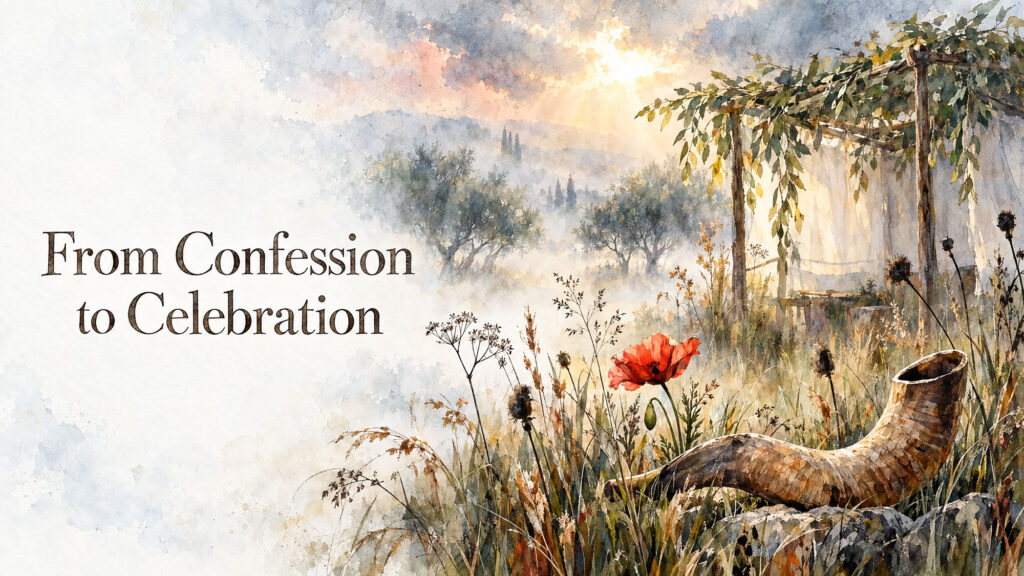
Every fall, as autumn began, the shofar was blown. The feast is called the Feast of Trumpets, or the Feast of Blowing — Yom Teruah. The ram’s horn was used in many ways: to warn of attack, to mark a sacred gathering, to interrupt ordinary life and say, Pay attention. That is what God was doing.
For ten days the people were to think. As they worked, walked, ate, enjoyed their families, and lived ordinary life, they were to meditate on the ways they ignored God: knowing the right thing and doing something else; never bothering to learn the right thing; failing to understand His Word; failing even to pay attention when His Word was read in the synagogue or the temple.
People sometimes imagine that church exists mainly to list our failures and make us feel bad. That is not so. Israel was meant to look at its mistakes with purpose: Why did we do it? What was the lure? What reward were we chasing? And how does that compare with the reward we would have known if we had let God direct us?
Ten days can feel like a long time. It is long enough to be honest.
Then came the great and holy day: Yom Kippur. They fasted for twenty-five hours. Nothing. In that way it is not unlike the pattern many still know — a season of feasting, then a season of penance. Before Lent there is Carnival. You celebrate, because a time of restraint is coming. Israel ate beforehand because, for a full day, they would eat nothing at all.
Yom Kippur remains the holiest day on the Jewish calendar. It was the one day someone could enter the Holy of Holies, and that someone was the high priest alone. On that day the name of God was spoken — and it was the only time anyone was to speak it. To treat the name of God lightly is sin. In much Jewish writing you will still see a capital G, a space, and a lowercase d, because even coming close to using the name carelessly is a risk they will not take.
The high priest went in and spoke that name. He performed sacrifices used only on that day. That is when the sins of the people were covered.
If you read Hebrews, you see that Jesus fulfilled what this day was always preparing them to understand. Yom Kippur covered sin — until the next sin was committed. Covering was real, but it was not final. The new failure sat on the table again, waiting for the next Feast of Trumpets, the next ten days of thought, the next holy day.
Israel took the day with a seriousness we rarely match. The high priest did not sleep the night before. He was rehearsed again and again so that every movement would be exactly as God had prescribed. No mistakes. We, by contrast, can talk about God almost at random and treat His presence as casual. They were instructed not to. God does not want us to suffer the consequences of our sin. If we do not sin, we do not suffer those consequences. If we do — and who among us has not? — we already know what that costs.
If we do not understand God at all, we might assume that the next instruction is to go home and feel terrible.
It is not.
God’s instruction is to throw a party. More than a week of it.
Some of the season involved fasting. Some of it involved understanding Scripture more deeply. Some of it involved sacrifice. But the mindset God wanted — and still wants for those who believe in His Son — is this: when sins are forgiven, we are where God wants us to be. He does not want us endlessly rehearsing guilt. He does not want us living under the weight of what we have done. Because He loves us as His children, He wants us to enjoy a clear conscience: the freedom of knowing we have been forgiven.
A clear conscience is worth a million dollars. It is worth everything. For God, it was worth the life of His Son.
There are things that happen between people when they actually go through forgiveness — not the cheap kind, the real kind. The relationship deepens. We lose the mystique of projecting an image, of having everything together.
We like that facade. We like people to believe we are fine, that we are good. But when we make mistakes with one another and walk through a proper process of forgiveness, something better than the image appears. We become real. We accept each other as we are. The relationship becomes stronger, not weaker.
I lost my sister this summer. We were different in almost every way that people use to measure a life — politically, in matters of faith, in a dozen other things. When I shared with her what my faith and my relationship with God meant to me, I think she sometimes looked at me with sympathy, as if to say, My little brother. He is so naïve.
As children we were not the best siblings. She did things to me that she should not have done, and I was a typical little brother. Going through forgiveness made us extremely good friends — not because we agreed, but because we knew each other and were committed to each other. We wanted what was best for each other. Most of that came from forgiveness.
It has been said that marriage is the relationship between two people who can forgive. If you cannot forgive, you will not stay married. That is true. It is not an argument for offending people on purpose so that you can enjoy the repair. It is simply the reality of love.
God wants that kind of depth with us: a relationship in which we are honest. We might as well be. You can fool a room. You can get people to believe you are better than you are, smarter than you are, more put together than you are. Can you fool God for a minute? Is it even possible?
We come to Him already known, exactly as we are. The struggle is often not that He refuses to forgive, but that we refuse to receive it.
Does He want us to understand sin? Yes. Ten days. Think about it. Meditate on His Word and what it says about right and wrong. Let Him be the teacher. But He does not want us to stay there. He wants us to move through the process of forgiveness. That was already His point in the Old Testament, long before the cross. And He also does not want us to stay in the sin.
If you keep tossing the keys, missing the catch, and listening to them rattle down the shaft, someone might reasonably conclude that you need help. Do not throw the keys in the air if you cannot catch them every time.
I use that story because I assume most of us have never actually dropped keys down an elevator. Other illustrations would land closer to home, and then it would sound as if the point were to manufacture guilt. That is not my job. Conviction is the Holy Spirit’s work. Conviction is a gift, because conviction draws us to forgiveness. And in that forgiveness is life — not mere existence, but life. That is the life God wants us to know by experience, all the time.
We do not have to wait for next year’s festival. This is every day. When we become aware that we are not in tune with God — not thinking as He wants us to think, doing what He wants us to stop, failing to do what He wants us to do — we are brought to change: in His power, in His wisdom, gaining the mind of Christ, letting His truths become our values, and then changing our behavior so that we do not have to climb down and look for our keys under the elevator.
He heals us physically, which concerns us most when we do not feel well. He heals us spiritually, and He wants us in that healed experience.
Would you keep a doctor who did not care about bringing you to health? You walk in and say that it hurts, that you can barely breathe, and the doctor shrugs: Don’t worry about it. You find a new doctor. You want someone who wants you well. You want a dentist who wants you to feel nothing in your teeth — no pain, no shock of cold, ice without discomfort.
God wants us to experience life. He does not promise that life will be easy. He does not promise full pocketbooks, rising stocks, or unbroken physical health. He does promise a relationship with Him that we were designed — born — to know by experience.
It is worth lingering on sacrifice, because the feasts will not let us treat sin as a small thing.
For the Feast of Trumpets the appointed offerings included a young bull, a ram, seven male lambs, and a male goat. Yom Kippur had its own, highly specific rites: a bull, two goats, and a ram, among other offerings, each saying something the people needed to know.
Then came the feast of celebration — the Feast of Booths, Sukkot. You might think, No more sacrifice. Everything has been forgiven. Yom Kippur has taken care of it. But the animals appointed for that feast numbered 189. One hundred and eighty-nine. That number divides by seven, the number of completeness. The point is not arithmetic. The point is that even joy, in the old covenant, still told the truth about cost.
Many of us have never watched an animal killed. That is all right. The experience was designed to shock. It was meant to make Israel aware that sin has a price. If we take sin lightly — if we shrug and say, “I made a mistake, and God wants me to be forgiven, so that’s that” — we have skipped the ten days of thinking. We have skipped the seriousness. We do not take sin very seriously. We often treat it as a joke. The world around us certainly does. It treats the church as a joke and God’s Word as a joke.
God does not want us to learn the hard way. But He also does not want us to miss how important sin is.
We learn many things the hard way. A skinned knee. A bandage everyone asks about. That is how some of us learned to ride a bike: a lot of bandages. Watch athletes flip and turn on a skateboard or a half-pipe and you can imagine the lessons that came with bruises. Dedication pushed them through it. God would like us to avoid as much of that as possible. Animals took a price so that the people might see, before they had to live it, how expensive and how ugly sin is.
Sin costs us far more than we recognize.
Friends visited recently — a high school friend of more than fifty years, and his wife. It was good to be together. But she had terrible trouble with her feet. She could not walk. In a city like Rome, that means you miss a great deal. She missed so much. This is home, and there is joy in taking people through its sites, its sounds, its history and art. They flew home having seen very little. She can look online at what she missed. It will not be the same. Being there is different.
God would rather we learned the other way: get the picture without the bandage, without the cast, without the spiritual limp. He wants us to understand what we are missing when we will not walk with Him, talk with Him, know that we are His, and let Him work in our lives.
People sometimes say it is so much easier for Christians, now that there are no more of these sacrifices. Killing an animal — even many animals — is easier than what we are asked to do.
Those sacrifices pointed to the solution: the death of Jesus on the cross. That was His price for us. You are right about that. Then He calls us to die to selfishness, to die to ourselves, and to live as a sacrifice to Him.
Romans 12:1–2. Look it up. Make the small sacrifice of opening the text, reading it, and thinking about it — not for a moment, but for ten days. I am not kidding. It is reasonable. It is the normal thing God asks. Dying to self as a living sacrifice: remaining alive, yet dying to my selfishness in order to receive what God wants to give.
If I try to justify myself by what I have done, I will never find justification. I am only playing games. If I admit that what I have done is wrong, that I have bad attitudes, that I have wrong thinking, and I confess those things to God because I want them out of my life, He will take care of it. I am seen as justified. Justification comes as a gift. I will never receive it by making myself look better with excuses.
It all comes down to this: Yom Kippur, the sacrifices, sin taken care of by God because I cannot take care of it, and forgiveness received as a gift. Every festival of the year pointed to Jesus, because He fulfilled the purpose of all of them. They were temporary. He is complete.
Some of you have received a crown on a tooth. In the process they always give you a plastic cap, so you can eat a little, lightly, until the real one is ready. Swallow the plastic cap and you will regret it. Then the day comes when they set the permanent crown, and you can eat as you like. Jesus is the permanent crown. He makes it right completely. All of this points to Him, and to the forgiveness He has for us.
So I hope you are enjoying the season of joy that begins when we go to Jesus, confess our sins, and find that He hears us. In His empathy, His sympathy, and His love, He forgives, because He is righteous. He has made the promise, and He will keep it.
It really boils down to a question: Is that what we want? Are we willing to humble ourselves, be honest with ourselves, and say, I want it. I want a difference.
The only real way to make that difference is no longer a covering sacrifice. The temple is gone. God has closed that door. No more of the partial. No more of the lesson without the thing itself. Everyone needs the experience of true forgiveness.
I cannot imagine how frustrating it must be to long for a covering that is no longer available. You can meditate on sin all you want. That covering is gone.
But the eraser is not. The elimination is not. Complete cleansing is more than available — if we want it.
Do you want it?
If we confess our sins, He is faithful and just to forgive us our sins and to cleanse us from all unrighteousness. He can also keep us from the next foolish toss of the keys. He will give wisdom, understanding, and self-control.
Keep the keys where they belong. Keep your life where it belongs.
God does not bring our sin to light simply to leave us feeling guilty. He wants to free us from what destroys us, restore our relationship with Him, and give
Our theme is redemption and forgiveness — blessings that come to us through blood and according to grace, the two great truths of Ephesians 1:7–10.

The gospel claims something bold: God offers real peace. Peace with Him, peace inside yourself, and peace with other people. But that peace isn’t automatic…

Advent starts by asking us to slow down and look past the distractions. Every culture wraps Christmas in its own extras—traditions, shopping, decorations, sentimental ideas.

After Paul left Galatia, other teachers came. They questioned Paul’s authority and offered the Galatians a far more “comfortable” message…
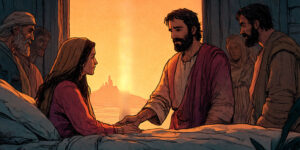
Jesus leaves the synagogue in Capernaum and steps into a home. Simon Peter’s mother-in-law lies with a high fever.

Paul writes to a church he has never visited, yet he sounds like a pastor who knows them well: he encourages, challenges, and points every road back to Christ…
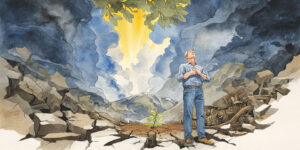
Biblical hope isn’t wishful thinking or daydreams. It is a confident expectation anchored in what God has already done in Christ and what he has promised to complete…
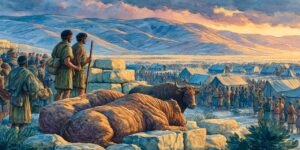
The story of Jabesh-Gilead opens like a political crisis—but it carries deep spiritual meaning. After Israel had settled in the Promised Land, their incomplete obedience left enemy nations still scattered