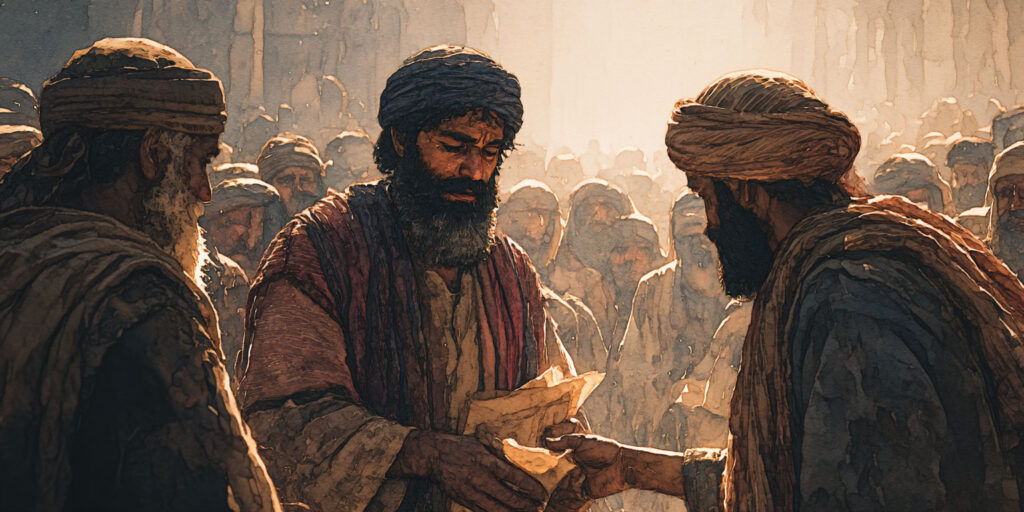
Israel was barely out of Egypt when another crisis surfaced—not water, food, or enemies, but leadership overload. Moses spent sunrise to sunset judging disputes for a nation of hundreds of thousands. People waited; Moses wore down. Enter Jethro, his father-in-law, with the counsel that reshaped Israel’s life together.
The Problem Jethro Saw
Bottlenecked justice: “What you’re doing is not good… you will surely wear yourselves out” (vv. 17–18).
A tired leader and a tired people: When everything depends on one person, no one thrives.
The Godward Center
Jethro’s first instruction isn’t managerial—it’s spiritual:
“You must represent the people before God and bring their cases to God” (v. 19).
Moses’ non-delegable work was prayer, teaching God’s ways, and setting the big direction.
The Plan: Shared Leadership
“Look for able men… and appoint them as heads of thousands, hundreds, fifties, and tens.” (vv. 21–22)
Structure: scalable layers of responsibility.
Flow: routine cases handled locally; hard cases escalated.
Goal: “It will be easier for you… they will bear the burden with you” (v. 22).
The Character That Counts
Jethro’s qualifications still preach:
Competent (“able”)
God-fearing (they answer to a higher Judge)
Trustworthy (“men of truth”)
Incorruptible (“hating dishonest gain”)
Skill matters, but character carries.
Why God Led Through a Desert
Scarcity trained Israel to depend on God daily. This plan kept that focus: Moses remained the primary intercessor and teacher, while the people learned to serve one another.
What This Means for Us
1) For leaders
Keep the main thing the main thing: prayer, the Word, vision.
Delegate outcomes, not just tasks: give real authority with accountability.
Build teams, not pedestals: leadership is stewardship, not spotlight.
2) For churches & ministries
Every member has a part. The body atrophies when parts don’t function.
Right people, right roles: character first; then fit and training.
Small circles, quick care: “tens and fifties” are today’s small groups and ministry teams.
3) For volunteers (and the volunteer-curious)
Try the FAT posture:
Faithful – show up, follow through.
Available – make space in your calendar.
Teachable – receive input, grow skills.
(And add Energetic/Responsive: serve with initiative, not inertia.)
The Fruit Jethro Promised
Leaders last longer.
People go home in peace—needs met, justice done.
God’s work multiplies through many hands and humble hearts.
Moses’ greatness wasn’t that he did everything; it’s that he did the right things—and trusted others with the rest. That same humility and shared burden is how communities become resilient, joyful, and fruitful under God.